
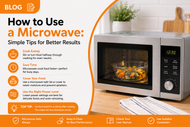
How to Use a Microwave: Simple Tips for Better Results
Posted by Briscoes on 12th Aug 2026
For many of us, using a microwave means reheating last night’s dinner, defrosting something from the freezer or making a quick bag of popcorn. However, today’s microwaves can do much more than simply warm up leftovers.
From cooking vegetables and baked potatoes to grilling, roasting and even baking, the right microwave can become one of the most useful appliances in your kitchen.
In this guide, we explain how to use a microwave safely, explore the different types available and share some simple tips to help you get better results from your appliance.
How Does a Microwave Work?
A microwave uses electromagnetic waves to make the water molecules in food move rapidly. This movement produces heat, which cooks or reheats the food.
Unlike a traditional oven, a microwave does not need a long preheating time. This makes it ideal when you need to prepare food quickly or only want to heat a small portion.
Cooking times will vary depending on the type of food, its weight, its starting temperature and the microwave’s wattage. Always check the food packaging and your appliance manual before selecting a cooking time.
Understanding the Different Types of Microwaves
Not every microwave offers the same functions. Choosing the right type will depend on how much space you have and whether you want to reheat food, cook complete meals or achieve a crisp, browned finish.
Standard Microwaves
A standard or solo microwave is designed for everyday jobs such as reheating meals, defrosting frozen food and cooking simple dishes.
You can use one to prepare vegetables, porridge, soup, baked potatoes and other quick meals. Standard microwaves are usually compact, easy to operate and an affordable choice for busy households, apartments, offices or student accommodation.
Explore the complete range of microwaves at Briscoes.
Combination Microwaves
A combination microwave brings together microwave cooking with additional oven-style functions. Depending on the model, these may include convection heat and grilling.
This allows you to do much more than reheat food. You may be able to bake, roast, grill and brown dishes using one convenient appliance. Combination models can be particularly useful in smaller kitchens or when you need additional cooking space while preparing a large family meal.
Microwaves with a Grill
A microwave with a grill is a versatile option for anyone who wants the speed of microwave cooking with a crisp or browned finish.
The grill function can be used for foods such as toast, bacon and cheese-topped dishes, depending on the model. Some appliances also allow you to combine microwave and grill functions, helping food cook quickly while producing a more appetising finish.
Browse Briscoes’ range of microwaves to find models with defrost, grill and automatic cooking programmes.
Built-In Microwaves
A built-in microwave is fitted neatly into a kitchen unit rather than sitting on the worktop. This creates a streamlined appearance and leaves more counter space available for food preparation.
Built-in models are available in different capacities and with a variety of cooking functions, including standard microwave, grill and combination cooking.
If you are still deciding which design, capacity or wattage you need, read the Briscoes Microwave Buying Guide.
How to Use a Microwave Properly
Although every model is different, a few simple steps can help you achieve more even and consistent results.
Choose a Microwave-Safe Container
Use glass, ceramic or plastic containers that are clearly labelled as microwave-safe. Avoid placing ordinary metal containers, cutlery or aluminium foil inside your microwave unless your appliance manual specifically states that they are suitable for a particular programme.
Some combination microwaves are supplied with metal racks or trays for grill and convection modes. Only use accessories supplied or approved by the manufacturer, and follow the instructions for the selected cooking function.
Cover Food Before Heating
Covering food with a microwave-safe lid or vented cover helps retain moisture and reduces splashes inside the appliance.
Do not use a completely sealed container, as pressure can build up during cooking. Leave the lid slightly open or use a cover with a steam vent.
Select the Correct Power Level
Full power is useful for heating liquids and many ready meals, but it is not always the best choice.
Lower power settings can provide better results when reheating delicate foods, melting chocolate or butter, softening ingredients and warming food without drying it out. The defrost setting uses reduced microwave power to thaw food more gradually.
Stir and Turn Food
Microwaves can create hot and cold spots, particularly when heating thick foods or large portions. Pause the programme halfway through to stir, turn or rearrange the food.
When reheating more than one portion, place the dishes evenly around the turntable rather than crowding them together.
Allow Standing Time
Food continues to cook for a short time after the microwave stops. Allowing it to stand helps the heat spread more evenly throughout the dish.
This is particularly important for ready meals, soups, sauces and large portions. Always follow the standing time shown on the food packaging or in the appliance instructions.
Check the Food Before Serving
Make sure reheated food is piping hot throughout, not just around the edges. Stir the food and check the centre before serving.
Take extra care with baby food, sauces and drinks, as the container may feel cooler than the food or liquid inside.
What Can You Cook in a Microwave?
A microwave can be used for many everyday dishes and ingredients, including:
-
Porridge and other hot cereals
-
Baked potatoes and sweet potatoes
-
Fresh and frozen vegetables
-
Rice and pasta in suitable microwave containers
-
Scrambled eggs
-
Soups and sauces
-
Steamed fish
-
Mug cakes and quick desserts
-
Popcorn
-
Ready meals and leftovers
Always use a microwave-safe recipe and follow the recommended cooking instructions for your particular model.
If you would prefer a crisp finish for chips, chicken, vegetables and other family favourites, explore the selection of air fryers at Briscoes.
Microwave Safety Tips
Microwaves are easy to use, but a few important precautions should always be followed.
Do not heat food or liquids in completely sealed containers. Steam can build up and cause the container to burst when opened.
Pierce foods with skins, such as potatoes and sausages, before cooking to allow steam to escape. Eggs should not be cooked in their shells unless you are using an accessory and method specifically approved by the manufacturer.
Be careful when heating water and other liquids. They can become extremely hot without visibly bubbling. Allow liquids to stand briefly and stir them carefully before drinking.
Use oven gloves when removing hot containers, particularly after using the grill or convection settings on a combination microwave.
Never operate an empty microwave, as this may damage the appliance. You should also stop using it if the door, seal or interior appears damaged.
How to Defrost Food in a Microwave
Many microwaves include automatic or weight-based defrost programmes. These adjust the power level and cooking time according to the type or weight of the food.
Remove unnecessary packaging and place the food in a microwave-safe dish. Turn or separate the food during the programme so that it defrosts evenly.
Cook defrosted meat, poultry and fish promptly and always follow the food manufacturer’s safety instructions. Do not refreeze food after microwave defrosting unless it has first been thoroughly cooked.
How to Keep Your Microwave Clean
Regular cleaning helps prevent smells, staining and a build-up of food inside your microwave.
Clean Spills Quickly
Allow the appliance to cool before wiping away splashes with a damp cloth or soft sponge. A small amount of mild washing-up liquid can be used for stubborn marks.
Avoid abrasive cleaners and scouring pads, as these may damage the interior or exterior finish.
Wash the Turntable
Remove the glass turntable and wash it using warm, soapy water. Make sure it is completely dry and correctly positioned before using the microwave again.
You should also clean the roller ring and the area underneath the turntable, as trapped crumbs can prevent it from rotating smoothly.
Remove Unwanted Smells
Place a microwave-safe bowl containing water and a few slices of lemon inside the appliance. Heat it until the water begins to steam, then leave the door closed for a few minutes.
Once the interior has cooled, wipe it with a clean cloth. The steam will help loosen dried-on food while the lemon can help freshen the interior.
Common Microwave Problems
If your microwave is not working as expected, there may be a simple explanation.
If the food is not heating properly, check that the door is completely closed and that the correct power level has been selected.
If the turntable is not rotating, make sure it is sitting correctly on the support ring. Remove any food or debris that may be blocking its movement.
If you notice sparks, smoke, burning smells or unusual noises, stop the microwave immediately and disconnect it if it is safe to do so. Check for unsuitable containers or metal objects inside. If the problem continues, do not use the appliance until it has been inspected by a qualified professional.
Find the Right Microwave at Briscoes
Whether you need a compact microwave for quick everyday meals or a versatile combination model for baking, grilling and roasting, Briscoes has options to suit kitchens of every size.
Explore the complete range of microwaves at Briscoes.ie and compare capacities, wattages, finishes and cooking functions from trusted appliance brands.
With the right appliance and a few simple techniques, your microwave can become much more than a place to reheat leftovers.