
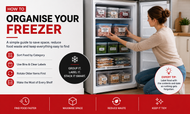
How to Organise Your Freezer
Posted by By Appliances Delivered on 6th Aug 2026
Are you tired of rummaging through your freezer to find tonight’s dinner—or discovering food you had completely forgotten about? A well-organised freezer makes it easier to see what you have, plan meals and reduce unnecessary food waste.
From grouping similar foods to making better use of storage containers, Appliances Delivered has put together a simple guide to help you organise your freezer and make the most of every drawer, shelf or basket.
A Step-by-Step Guide to Organising Your Freezer
1. Empty and Clean Your Freezer
Start by removing everything from your freezer. Place the food in a cool box or insulated bags while you clean, using ice packs to help keep it frozen.
Wipe down the drawers, shelves and interior surfaces with warm water and a small amount of washing-up liquid. If there is a significant build-up of ice, you may need to defrost the freezer first.
This is also the ideal time to dispose of damaged packaging, unidentified leftovers and anything that has been stored for too long.
2. Check What You Have
Before returning anything to the freezer, take a quick inventory. Check dates, identify duplicate items and make a note of anything that should be used soon.
Keeping a freezer inventory on your phone, kitchen noticeboard or freezer door can make meal planning much easier. Remember to update it whenever something is added or removed.
3. Group Similar Foods Together
Divide your frozen food into categories so everything has a designated place. Depending on what your household uses most often, you could create sections for:
- Meat and poultry
- Fish and seafood
- Vegetables and fruit
- Bread and baked goods
- Ready meals
- Batch-cooked dinners
- Children’s food
- Desserts and ice cream
Choose categories that suit your household and keep them consistent. This will make it much easier to find what you need without leaving the freezer door open for too long.
4. Use Freezer-Safe Containers
Reusable, stackable containers can help keep leftovers and batch-cooked meals tidy while making better use of the available space.
Choose containers that are clearly marked as freezer-safe. Remove as much excess air as possible from freezer bags before sealing them, as this can help reduce freezer burn.
Transparent containers are particularly useful because you can see what is inside without opening them.
5. Label and Date Everything
Unlabelled freezer containers can quickly become a guessing game. Clearly label homemade meals and leftovers with:
- The name of the food
- The date it was frozen
- The number of portions
- Any reheating or cooking instructions
Use freezer labels or a marker that will not rub off in cold conditions.
6. Put Older Food at the Front
Follow a “first in, first out” system. When adding new groceries, place them behind older items so the food that has been in the freezer longest is used first.
Keep anything that needs to be eaten soon in a clearly marked container or a designated “use first” section.
7. Keep Everyday Items Within Easy Reach
Place frequently used foods in the most accessible drawers or baskets. Family favourites, frozen vegetables and quick midweek meals should be easy to reach without having to rearrange the entire freezer.
Items used less frequently can be stored towards the back, bottom or in the lowest drawer.
8. Make the Most of the Space
Stackable containers and flat freezer bags can help you use the available space more efficiently.
Try freezing soups, sauces and mince-based meals flat in sealed freezer bags. Once frozen, they can be stored upright like files, making them easier to organise and quicker to defrost.
Avoid forcing too much into the freezer. Some space is needed around food and air vents to allow cold air to circulate properly.
9. Maintain Your System
Spend a few minutes checking your freezer before completing the weekly shop. This will help you avoid buying items you already have and remind you to use older food.
Wipe up spills promptly and check regularly for excessive frost or ice. If your freezer is not frost-free, defrost it when the ice becomes approximately 5–6mm thick or begins to interfere with drawers and storage space.
What Are the Benefits of an Organised Freezer?
Saves Time
When everything has its own place, you can find ingredients and meals quickly. This means less time rummaging through drawers and less time standing with the freezer door open.
Reduces Food Waste
An organised freezer makes it easier to see what you already have and identify food that should be used soon. This can help stop forgotten food from being left at the back of a drawer.
Makes Meal Planning Easier
Knowing exactly what is available makes it easier to plan meals, use leftovers and prepare quick dinners on busy evenings.
Helps You Shop More Efficiently
Checking your freezer before shopping can help prevent duplicate purchases and make better use of food you already have.
Supports Efficient Cooling
Leaving enough room for cold air to circulate helps your freezer maintain an even temperature. Keeping drawers organised can also prevent packaging from blocking vents or stopping the door from closing correctly.
How to Organise an Upright Freezer
Upright freezers usually have a combination of shelves, drawers and door compartments.
Assign a different category to each drawer or shelf and use labelled containers to keep smaller items together. Place everyday foods at eye level and heavier items in the lower drawers.
Avoid placing loose bags on top of one another, as items can become difficult to find and may fall out when the door is opened.
How to Organise a Chest Freezer
Chest freezers offer plenty of storage space, making them ideal for larger households, bulk buying and batch cooking. However, their depth can make it easy for food to disappear at the bottom.
Use stackable baskets or sturdy freezer-safe containers to divide the freezer into sections. Give each basket a category and attach a clear label to the handle.
Keep frequently used items in the upper baskets and place larger or less frequently used foods underneath. A written inventory is especially useful for a chest freezer because not everything is visible at once.
Freezer Organisation Mistakes to Avoid
Overfilling the Freezer
Packing food too tightly can restrict airflow, block vents and make it harder for the appliance to maintain a consistent temperature. It can also prevent drawers from closing properly.
Leave enough room for air to circulate and always make sure the door can seal completely.
Blocking the Air Vents
Avoid placing boxes, bags or containers directly against internal vents. Blocked vents can lead to uneven cooling and may cause the appliance to work harder.
Forgetting to Rotate Food
Always place newly purchased food behind older items. Rotating your supplies helps ensure that older food is used first.
Using Unsuitable Containers
Ordinary takeaway containers, glass jars and thin storage bags may crack, split or allow air into the food. Always choose packaging designed for freezer use.
Freezing Food Without Labels
Even familiar meals can be difficult to identify once frozen. Labelling each container prevents confusion and helps you keep track of storage times.
Leaving the Door Open
Decide what you need before opening the freezer. An organised layout makes it quicker to find items and helps reduce the amount of warm air entering the appliance.
Ready to Organise Your Freezer?
A few simple changes can make your freezer easier to use, help reduce food waste and take the stress out of meal planning. Start by cleaning it out, grouping similar foods and labelling everything clearly. Once you have created a system that works for your household, a quick weekly check should be enough to keep it organised.
Need more space for batch cooking, family favourites or the weekly shop? Explore the latest upright and chest freezers available from Appliances Delivered.
Shop All Freezers