

How to Clean Your Oven Glass Door
Posted by By Appliances Delivered on 7th Aug 2026
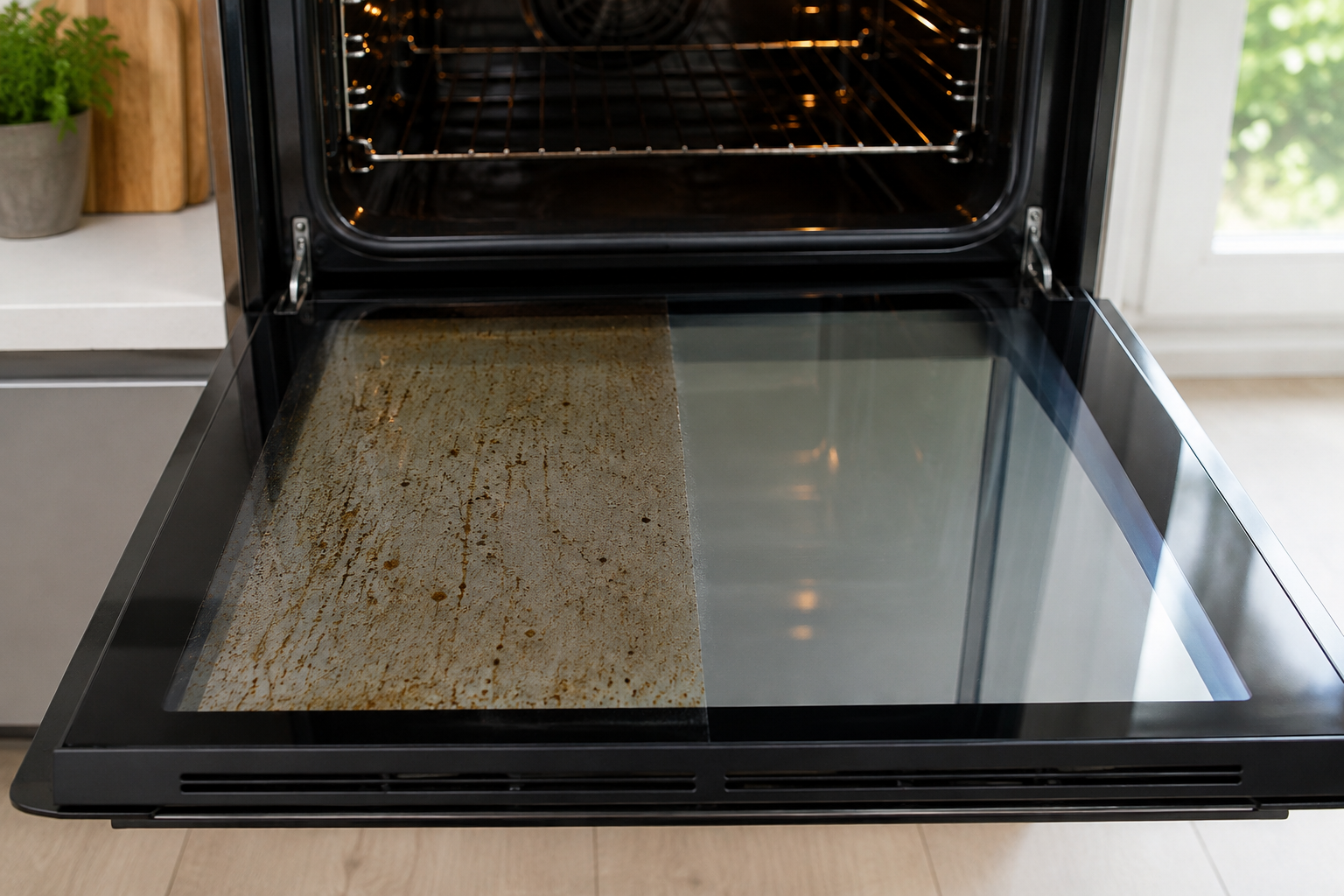
Is baked-on grease stopping you from seeing what is cooking inside your oven? A cloudy or stained oven door can be frustrating, but you may be able to restore its shine without hours of scrubbing.
Regularly cleaning your oven glass does more than keep your kitchen looking its best. Removing grease and food residue before it becomes heavily baked on makes future cleaning easier and helps you monitor food without repeatedly opening the door and releasing heat.
This step-by-step guide explains how to clean the inside and outside of an oven glass door, tackle stubborn stains and achieve a clear, streak-free finish.
If your existing appliance is becoming difficult to maintain, explore the complete range of ovens available from Appliances Delivered.
Before You Clean Your Oven Door
Always check the instruction manual supplied with your oven before cleaning it. Door construction, glass coatings, seals and recommended cleaning products vary between manufacturers and models.
Make sure the oven is completely switched off and cold before you begin. If possible, isolate it from the electricity supply according to the manufacturer’s instructions.
Open a window for ventilation and keep children and pets away from the appliance and cleaning products.
Never pour water directly onto the oven door, controls, vents or electrical components. Apply water or cleaning solution to your cloth or sponge instead.
What You Will Need
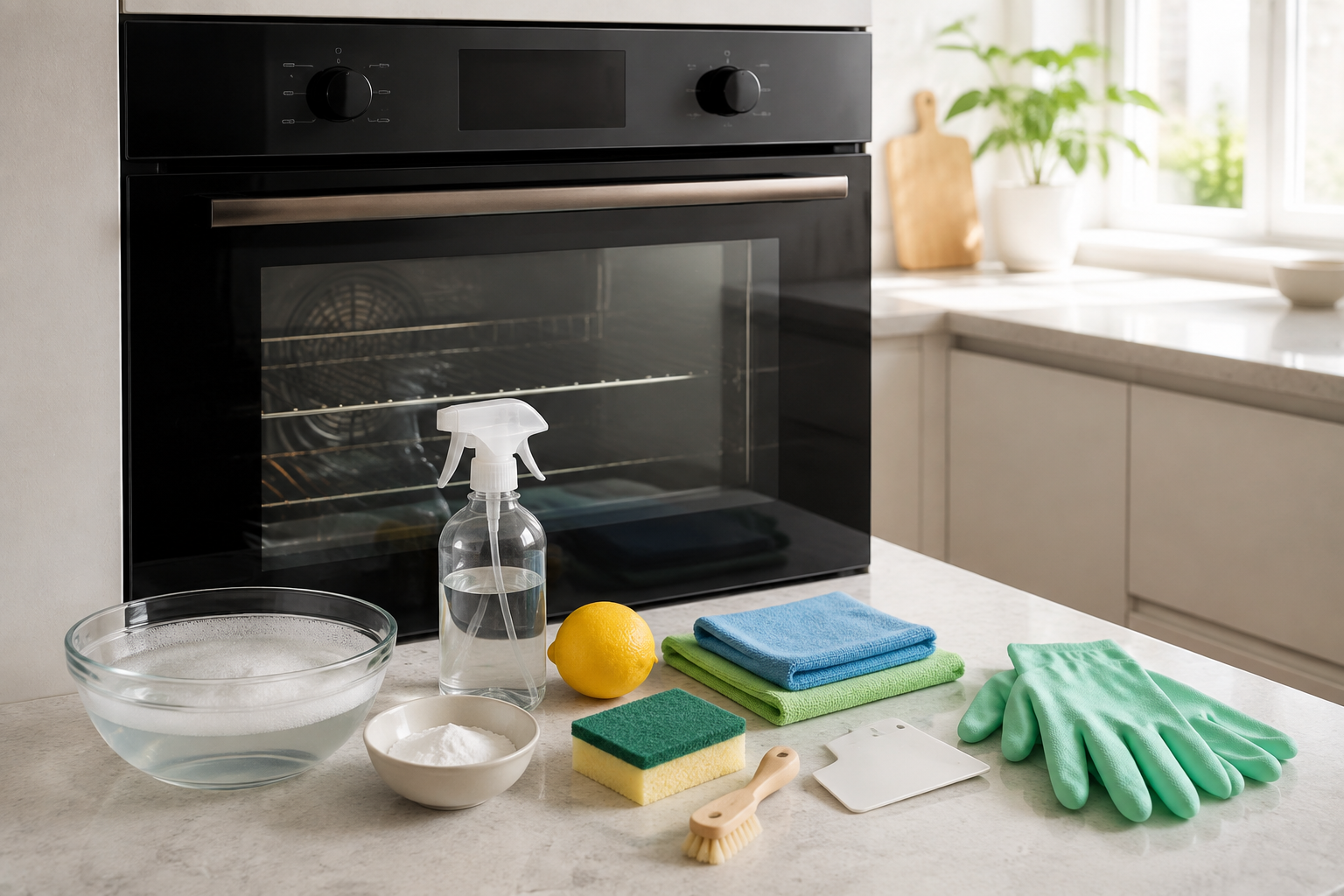
Most of the supplies required for a routine clean may already be in your kitchen cupboard.
Basic Cleaning Supplies
- Warm water
- Mild washing-up liquid
- Soft microfibre cloths
- A soft, non-abrasive sponge
- Bicarbonate of soda
- White vinegar or lemon juice
- Rubber cleaning gloves
- A dry, lint-free cloth
Optional Items for Stubborn Stains
- A soft, non-abrasive brush
- A plastic scraper approved for glass
- A cleaner specifically approved for your oven glass
- An old towel to protect the floor
Avoid steel wool, metal scourers, abrasive powders and harsh scrubbing pads. These can leave permanent scratches on the glass or damage surrounding finishes.
Do not use a metal blade or razor scraper unless the oven manufacturer specifically confirms that it is safe for that model. Oven doors may have coated glass that can be damaged by scraping.
How to Clean the Outside of an Oven Glass Door
The outside of the door generally only requires a light clean to remove fingerprints, dust and cooking splashes.
Add a small amount of mild washing-up liquid to a bowl of warm water. Dip a soft microfibre cloth into the water and wring it out well.
Wipe the glass gently, paying particular attention to grease around the handle and edges. Do not allow excess water to run into the door vents, controls or between the glass panels.
Wipe away any soap with a separate damp cloth before drying and buffing the glass with a clean, lint-free cloth.
If the exterior has a stainless-steel surround, wipe in the direction of the grain and follow the manufacturer’s care instructions.
How to Clean the Inside of an Oven Glass Door
The inside of the glass is usually where grease and burnt-on food accumulate.
Step 1: Make Sure the Oven Is Cold
Wait until the oven and its door are completely cold. Do not attempt to clean warm glass, as a sudden temperature change may damage it.
Step 2: Protect the Floor
Place an old towel or protective covering underneath the open door to catch crumbs and drips. Make sure the door is stable and do not stand, lean or place heavy objects on it.
Step 3: Remove Loose Debris
Use a soft, dry cloth or brush to remove crumbs and loose food particles from the glass and around the edges.
Avoid pushing debris or liquid into hinges, seals or ventilation openings.
Step 4: Apply Warm, Soapy Water
Dip a non-abrasive sponge into warm, soapy water and wring it out thoroughly.
Wipe the glass in gentle circular motions, allowing the dampness to soften greasy residue. Leave it for a few minutes before wiping the surface again.
Step 5: Tackle Stubborn Marks
For more persistent stains, use a bicarbonate of soda paste if your appliance manual permits it. Apply the paste only to the glass, keeping it away from seals, hinges, vents and coated trim.
Allow it time to soften the residue, then clean the area gently with a soft sponge.
Step 6: Rinse and Dry
Remove every trace of soap or bicarbonate of soda using a clean, damp cloth. You may need to rinse the cloth and repeat this several times.
Finish by drying the glass with a soft, lint-free microfibre cloth.
How to Use Bicarbonate of Soda on Oven Glass
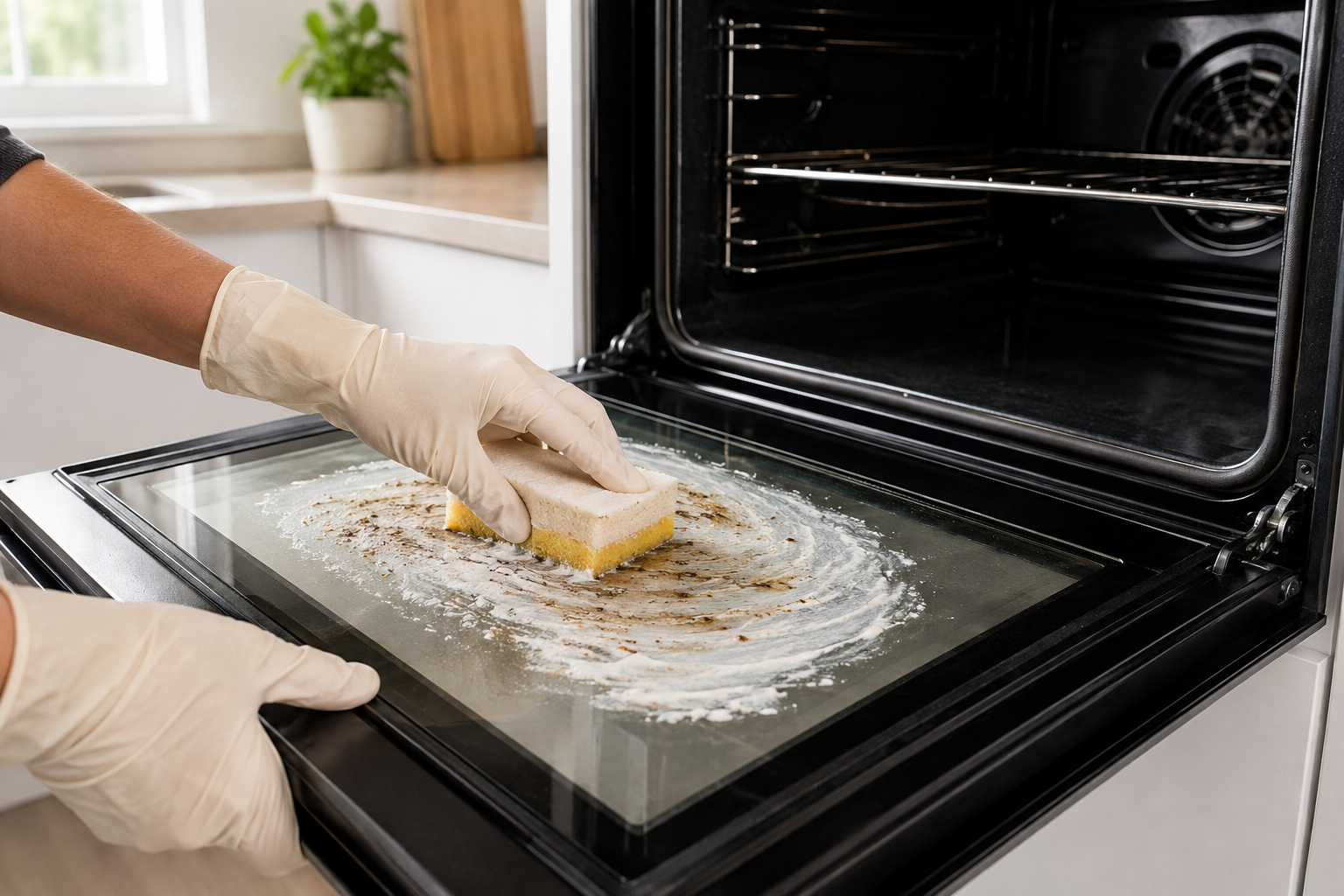
A bicarbonate of soda paste can help loosen baked-on grease without relying on a heavily abrasive cleaner.
Mix approximately three parts bicarbonate of soda with one part water. Add the water gradually until you have a thick, spreadable paste that will remain in place on the glass.
Apply a thin layer to the stained areas. Avoid spreading it over rubber seals, heating elements, vents, hinges or other components.
Leave the paste for approximately 15 to 20 minutes. Very stubborn residue may need longer, but always follow your oven manufacturer’s cleaning guidance.
Use a damp, non-abrasive sponge to work gently over the stains. Do not scrub aggressively.
Remove the paste with a clean, damp cloth, rinsing it regularly. Continue wiping until no white residue remains, then dry the glass thoroughly.
Cleaning Oven Glass with Vinegar
A diluted vinegar solution can help break down light grease and remove streaks, provided the manufacturer confirms it is suitable for your oven.
Mix equal parts white vinegar and water in a clean spray bottle. Rather than spraying directly onto the oven, lightly mist the solution onto a cloth.
Wipe the glass while avoiding seals, vents, trim and control panels. Follow with a separate cloth dampened with clean water, then buff dry.
Do not mix vinegar with commercial cleaning products. In particular, vinegar should never be combined with chlorine bleach or other chemicals.
If you have already used bicarbonate of soda, wipe it away completely before using vinegar as a separate finishing step.
Can You Remove the Oven Door for Cleaning?
Some oven doors are designed to be removed, making the inner glass easier to reach. However, you should only remove a door if the instruction manual provides a clear procedure for your exact model.
Oven doors are heavy, and their hinges may be spring-loaded. Incorrect removal or refitting can cause injury or damage the hinges, glass and door seal.
If removal is approved, ask another adult to help if the door is heavy. Place it on a flat, stable and well-padded surface, following the manufacturer’s instructions.
Never attempt to force the hinges or release mechanisms.
Some ovens and freestanding cookers include removable-door or removable-glass systems designed to make regular cleaning more convenient.
How to Clean Between the Oven Door Glass Panels
If dirt is trapped between the glass panels, consult the appliance manual before attempting to reach it.
Some doors have removable internal glass panels, while others are sealed and should only be opened by a qualified technician. Removing screws or taking apart an unsuitable door could damage its insulation, ventilation system or safety glass.
If your manual provides instructions for removing the inner panel:
- Switch off the appliance and make sure it is completely cold.
- Remove the door only if instructed.
- Place the door on a stable, protected surface.
- Photograph the position of trims, spacers and panels before removing anything.
- Handle the glass carefully by its edges.
- Clean it using an approved solution and a soft cloth.
- Dry every panel completely.
- Reassemble the components in the correct order.
Do not use the oven until the door has been securely reassembled and fitted correctly.
If you are unsure at any stage, stop and arrange professional assistance.
Can You Use Oven Cleaner on the Glass?
Only use a commercial oven cleaner if both the product label and your oven manual say it is suitable for the glass.
Some powerful cleaners can damage coatings, decorative markings, seals, aluminium trim and other door components. Apply any approved cleaner sparingly and keep it away from seals, vents, controls and heating elements.
Wear gloves, ventilate the room and follow all product safety instructions. Never mix different cleaning products.
Remove every trace of cleaner before using the oven again, as residue may produce unpleasant fumes or bake permanently onto the surface.
Using a Plastic Scraper on Stubborn Residue
A plastic scraper may help lift softened food without scratching the glass, but it must be used carefully.
First, confirm that the manufacturer permits one. Keep the surface damp and hold the scraper at a shallow angle. Use light pressure and work slowly.
Never scrape dry glass or use a chipped tool. Stop immediately if you meet heavy resistance.
A bicarbonate of soda paste and additional soaking time are generally safer than aggressive scraping.
How to Get a Streak-Free Finish
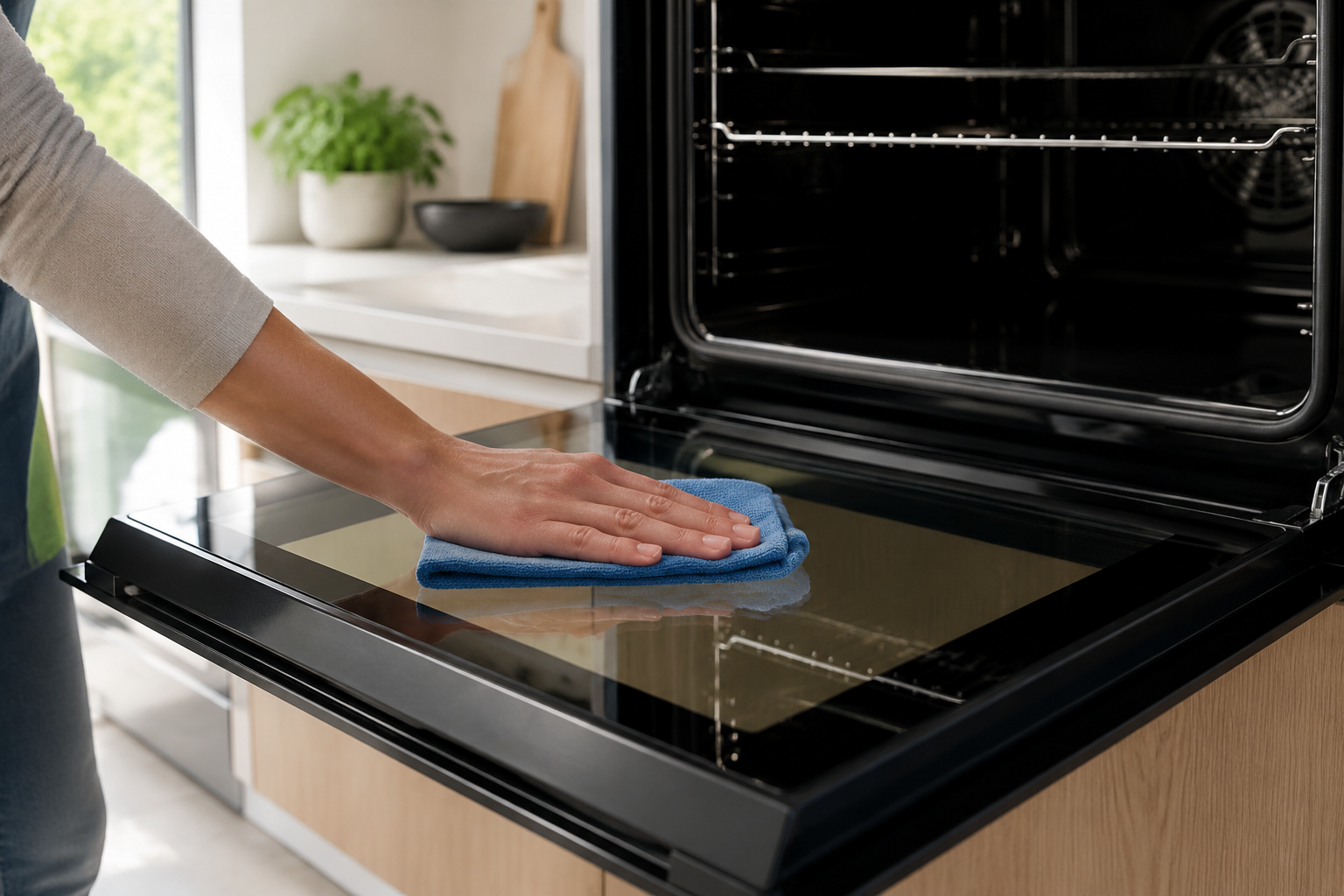
Once the grease is gone, a final buff will help restore the shine.
Use a clean cloth for the final rinse rather than the same cloth used to remove grease. Any remaining oil or cleaning solution may create streaks.
Dry the glass immediately with a fresh microfibre cloth. Buff it using light, overlapping movements until the surface is clear.
Check the glass from different angles, as streaks can be difficult to see in low light.
Avoid using too much cleaning solution. A lightly dampened cloth is usually more effective than soaking the glass.
How Often Should You Clean an Oven Glass Door?
How often you need to clean the glass depends on how frequently you cook and the types of food you prepare.
For most households, a quick wipe after messy cooking and a more thorough clean approximately once a month can help prevent heavy build-up.
Always wait until the oven has cooled completely before wiping the glass.
It may be time to clean your oven door if you notice:
- A visible film of grease
- Brown or black baked-on marks
- Food splashes around the edges
- Smoke or unpleasant smells during cooking
- Difficulty seeing food through the glass
- Grease beginning to collect between accessible panels
Cleaning spills promptly prevents them from being baked onto the glass during the next use.
What About Self-Cleaning Ovens?
Some modern single ovens include pyrolytic, catalytic or steam-cleaning functions that reduce the amount of manual scrubbing required.
A pyrolytic programme uses very high temperatures to turn food residue into ash, which can be wiped away once the oven is completely cold. The door locks during the cycle for safety.
Catalytic liners absorb and break down grease while the oven is in use, while hydrolytic or steam-cleaning programmes soften residue using water and lower temperatures.
These systems work differently, so always follow the instructions supplied with the appliance. Remove accessories only when directed, wipe away heavy spills before starting and never apply cleaning chemicals before a self-cleaning cycle unless expressly instructed.
If easier maintenance is high on your wish list, explore Whirlpool ovens and Hotpoint ovens, including models with pyrolytic, catalytic and hydrolytic cleaning technologies.
When Is It Time to Replace Your Oven?
Dirty glass can usually be cleaned, but cracked, chipped or loose glass requires professional attention. Do not use an oven with damaged door glass or a faulty seal.
A door that no longer closes properly may allow heat to escape and affect cooking performance. Contact a qualified appliance technician rather than attempting a structural repair yourself.
If your appliance is no longer reliable or economical to repair, Appliances Delivered offers a wide choice of single ovens, double ovens, freestanding cookers and range cookers.
Keep Your Oven Glass Clear and Sparkling
Keeping your oven door clean is much easier when you tackle splashes before they become heavily baked on.
Warm soapy water, a soft cloth and occasional use of a manufacturer-approved bicarbonate of soda paste will handle many everyday marks. The most important rule is to follow the instructions for your exact appliance and avoid abrasive tools or excessive liquid.
For an appliance designed to make cooking and cleaning simpler, browse the complete range of ovens and cookers at Appliances Delivered.